Would you like to switch to the accessible version of this site?

Go to accessible site Close modal window

Don't need the accessible version of this site?

Hide the accessibility button Close modal window
Accessibility View Close toolbar
Menu
  • Home
  • Dental Services
    • Implants
      • Dental Implants
      • Mini Implants
      • Dental Implants FAQ's
      • Iluma Ultra Cone Beam CT Scanner
    • Cosmetic Dentistry
      • High End Cosmetic Case
      • Veneers
      • Whitening
      • Flash Smile
      • Snap On Smile
      • Bonding
      • Inlays and Onlays
    • Restoration
      • Bridges
      • Crowns
      • Dentures
      • Composite
    • Dental Hygiene
    • Pediatric
      • Sealant
      • Mouth Guards
    • Periodontic
      • Biopsy
      • Bone Grafting
      • Canine Exposure
      • Ridge Augmentation
      • Sinus Augmentation
      • Crown Lightening
      • Frenectomy
      • Gum Crafting
      • Occlusal Adjustment
      • Periodontal Splinting
      • Osseous Grafting
      • Cosmetic Periodontal Surgery
      • Periodontal Gum Disease
      • Scaling and Root Planing
      • Soft Tissue Graft
      • Osseous Surgery
    • Oral Surgery
      • Wisdom Teeth
      • Extraction
      • Extraction Site Preservation
      • Oral Pathology
      • Sleep Apnea
    • Orthodontic
      • Invisalign
      • Clear Braces
      • Traditional Braces
      • TMJ
      • Night Guards
  • Why Choose Us?
  • Our Office
    • Location and Parking
  • About Us
    • Meet The Doctors
    • Meet The Staff
  • How To Schedule
    • Schedule Now
    • New Patient Forms
    • Q and A
    • Educational Video
    • Surgical Instruction
      • After Wisdom Tooth Removal
      • Before Anesthesia
      • After Dental Implant Surgery
      • After Impacted Tooth
      • Multiple Tooth Extraction
    • Post Op Instructions
    • Links
  • Our Technology
    • Sedation
      • Anxiolysis
      • Sedation Q & A
      • Sedation F & Q
    • Laser
    • Panorex / TMJ images
    • IntraOral Camera
    • Rotary Indodontics
    • Electric Handpiece
    • Cone Beam 3D
    • Oral Cancer Screening
    • Digital X-Ray
  • Testimonials
  • Contact Us
  • Newsletter
  • Patient Education
    • Educational Videos
    • Cosmetic & General Dentistry
    • Emergency Care
    • Endodontics
    • Implant Dentistry
    • Oral Health
    • Oral Hygiene
    • Oral Surgery
    • Orthodontics
    • Pediatric Dentistry
    • Periodontal Therapy
    • Technology
Round Tooth Logo

Let Us Be Your Dental Home!

Cesar O Cruz, DDS AEGD

(206) 525-6636

8014 35th Ave NE, Seattle WA 98115

Call for appointment or send us a request.

Online Schedule
  • Home >
  • Articles >
  • Orthodontics >
  • Types of Braces

Types of Braces

  • Created in Orthodontics

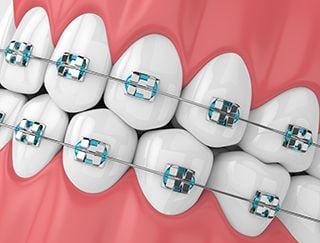
Metal Bracesmetal braces

Traditional metal braces are the most common type of braces, as they correct a variety of orthodontic conditions and are generally the most affordable. Made of high-grade stainless steel, metal braces straighten your teeth using metal brackets and archwires. With metal braces, you have the option of adding colored elastics (ligatures) for a unique and colorful smile.

Self-Ligating Bracesself-ligating braces
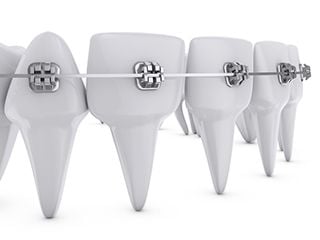
Traditional braces make use of bands around the brackets to hold the adjusting wire in place. “Self-ligating” means “self-binding” or “self-tying.” These braces use brackets, but with a very different design. Self-ligating brackets have mechanisms such as doors or clips, which hold the wire to the bracket without the need for rubber bands or metal ligatures. Without these ligatures, brackets are smaller and less noticeable. They also don’t need as many adjustments, so you’ll require fewer appointments and generally undergo a shorter treatment time.

Clear Bracesclear braces
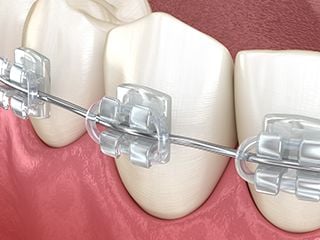
Clear braces use brackets made of clear or tooth-colored ceramic, which blend beautifully with the color of your tooth. The elastic ligatures, or rubber bands, can be chosen to match the brackets or your enamel.

Clear brackets can sometimes be somewhat larger (though this isn’t always the case), and, because they can be more abrasive than their metal counterparts, they are often recommended for upper teeth only.

Clear Alignersclear aligners
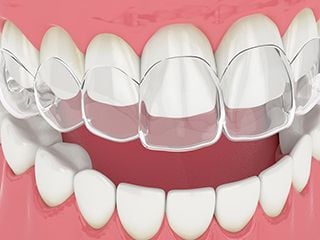
Clear aligners use a series of custom-made trays that shift teeth gradually into place. For patients who need mild-to-moderate corrections, this can be a great option.

In addition to being clear, you can change your aligners at home instead of having to visit our office every few weeks. They can even be removed while you eat, brush, and floss.

Lingual Braceslingual braces
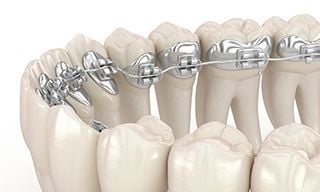
If you want corrective braces but don’t like the look of traditional braces with the metal showing on the front, you have an alternative in lingual braces. As opposed to metal braces visible across the front of the teeth, lingual braces are placed on the backsides of the teeth. Most of the metal in lingual braces is not visible to other people, unless you have widely spaced teeth.

Lingual braces are just as effective as traditional braces and are worn for the same amount of time. They are helpful for people who play contact sports or play wind instruments because lingual braces don’t get in the way. Finally, lingual braces are a great option for patients who are sensitive to plastic and can’t wear other types of clear or invisible braces.

  • Educational Videos
  • Cosmetic & General Dentistry
  • Emergency Care
  • Endodontics
  • Implant Dentistry
  • Oral Health
  • Oral Hygiene
  • Oral Surgery
  • Orthodontics
  • Pediatric Dentistry
  • Periodontal Therapy
  • Technology


Find Us on Facebook for Daily Oral Health Tips

Contact Us

Send Us an Email

Our Location

We are in the heart of Wedgwood!

Office hours

(Lunch 1-2 pm)

Monday:

8:00 am-6:00 pm

Tuesday:

8:00 am-6:00 pm

Wednesday:

8:00 am-6:00 pm

Thursday:

8:00 am-6:00 pm

Friday:

Closed

Saturday:

Closed

Sunday:

Closed

  • Copyright © 2026 MH Sub I, LLC dba Officite.
  • Admin Log In
  • Site Map