

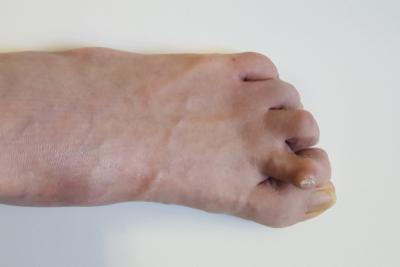
At FOOTDRx in West Village, NY and Englewood, NJ, we often see patients who assume a curling toe is only a minor cosmetic issue. In reality, hammertoes are progressive deformities that can become more painful and harder to treat over time. The earlier we identify the warning signs, the better chance we have to slow progression and reduce stress on the foot before daily activity becomes more difficult.
A Toe That Starts to Curl Downward
One of the earliest signs of hammertoe is a smaller toe that begins to bend downward at one or both joints. At first, the toe may still feel flexible. You may even be able to straighten it with your hand. That flexibility matters, because early-stage hammertoes often respond better to conservative treatment. Once the toe becomes rigid, treatment becomes more complicated and may eventually require surgery.
Pressure, Rubbing, And Shoe Discomfort
Another early clue is irritation from shoes that never used to bother you. As the toe changes position, the bent joint may start rubbing against the top or inside of your shoe. That friction can lead to redness, tenderness, corns, or calluses. Many patients notice this problem first when wearing narrow shoes, tight shoes, or high heels. If a toe keeps rubbing in the same area, do not ignore it. Repeated pressure can make the deformity more uncomfortable and more noticeable over time.
Changes in The Way Your Foot Functions
Hammertoes can also affect how the foot works during walking and standing. You may start shifting pressure away from the irritated toe without realizing it. That compensation can change the way you move and create discomfort in other parts of the foot. Some patients report soreness in the ball of the foot, while others feel more fatigue after long periods on their feet. A toe deformity may look small, but it can gradually affect mechanics across the entire forefoot.
What You Can Do Early On
When hammertoes remain flexible, early care can make a meaningful difference. We often recommend shoes with a wide toe box so the toes have room to rest in a more natural position. Stretching and flexing the toes may also help maintain mobility. In some cases, protective padding or a corn pad can reduce friction over the bent joint. Custom orthotics may also improve support and reduce pressure patterns that contribute to worsening deformity.
When It Is Time To Schedule An Evaluation
You should not wait until the toe becomes fixed in place or significantly painful. If you notice curling in one of the smaller toes, visible structural changes, persistent rubbing, or ongoing pain, it is time for an evaluation. Early diagnosis gives us more options and may help you avoid more aggressive treatment later.
Get Help Before Hammertoe Progresses
At we treat hammertoes with a focus on early intervention and practical long-term relief. Call FOOTDRx in West Village, NY and Englewood, NJ, at (888) 265-0610 to schedule an appointment and find out how we can help protect your foot health from hammertoes.