
Acne Treatment in Tustin, CA
If you have acne that just won’t go away, you may want to take a closer look at your skin. It’s possible that you don’t have acne. Other skin conditions can look a lot like acne. Stubborn acne can also be a sign of something serious going on inside your body. To see clearer skin, you’ll need to get that serious condition under control first.
You’ll find pictures along with descriptions of such skin conditions below. If your acne resembles any of these pictures, seeing a dermatologist can help you get the right diagnosis and treatment.

Acne Sending Warning Signs
Acanthosis nigricans
Clues you have more than acne: Women who have polycystic ovary syndrome (PCOS) often have acne. They usually have other signs of a hormone problem like hair loss on their head, noticeable hair growth on their face, or an area of skin that starts to darken and sometimes thicken. PCOS can also cause irregular periods, sleep apnea, diabetes, heart disease, and other health problems.
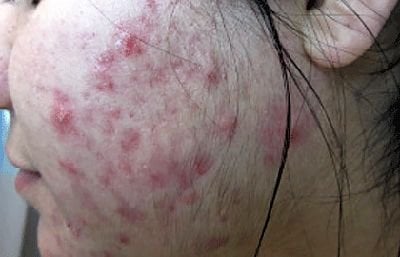
Treatable: Yes. Women who suspect they may have PCOS should see their dermatologist or primary care doctor immediately.
If you’re diagnosed with PCOS, you should also be under the care of a doctor who can treat the cysts in your ovaries. You may also need to see other doctors to get treatment for conditions like diabetes or heart disease.
A dermatologist can treat your acne, hair loss, and noticeable hair growth. The darkening skin usually goes away when the disease causing it is treated. The medical name for this darkening skin is acanthosis nigricans.

Skin Conditions That Can Look Like Acne
Rosacea
Clues you’re not dealing with acne: The acne-like breakouts usually appear where you have redness on your face. The redness may come and go or be permanent. The skin on your face tends to be very sensitive. It may sting or burn. Your eyes may feel gritty.
Treatable: Yes. Treatment can clear the acne-like breakouts and help your skin feel better. Rosacea cannot be cured, so you may need ongoing treatment.
Keratosis pilaris
Clues you’re not dealing with acne: Unlike pimples, these bumps feel rough and usually appear on dry skin. You’ll usually see them on your upper arms and on the front of your thighs. You may notice that family members also have these bumps.

Treatable: These bumps are harmless, so you don’t need to treat them. If the itch, dryness, or appearance bothers you, treatment can help.
Hidradenitis suppurativa
Clues you’re not dealing with acne: You have pimple-like bumps or deep acne-like cysts in places where skin touches skin, such as the underarm, groin, buttocks, or upper thighs. Women can also get these underneath their breasts.
Treatable: Yes. Treatment is important because it can prevent HS from worsening. If HS worsens, the acne-like eruptions can grow deep into the skin and become painful. They can rupture, leaking bloodstained pus onto your clothing. This fluid often has a foul odor.
As the deep bumps heal, scars can form. With repeat outbreaks, the skin often begins to look spongy as tunnel-like tracts form deep in the skin.

Perioral dermatitis
Clues you’re not dealing with acne: You have a breakout that looks like many small pimples, but it develops only around the mouth. Sometimes, the breakout develops only around the eyes (periorbital dermatitis) or nose (perinasal dermatitis) instead of the mouth. The skin may burn or itch.
Treatable: Yes. Dermatologists recommend treatment. Without it, the breakout may last for months or years.
Chloracne
Clues you’re not dealing with acne: Chloracne is very rare. If it develops, you’ll likely see blackheads. These can form on the temples, cheekbones, and elsewhere on the body. You may see whiteheads, nodules, or straw-colored cysts on the face and elsewhere. Patches of gray-colored skin are common. Some people have blisters. Most people with chloracne feel very sick.
The signs and symptoms usually develop 2 to 4 weeks after you’ve come into contact with toxic chemicals found in insecticides, herbicides, or wood preservatives. Agent Orange was a known cause of chloracne during the Vietnam War.

Treatable: The skin will clear when you stop coming into contact with the chemical that caused the chloracne. The clearing usually happens within 6 months to 3 years.
The skin can also be treated with antibiotics, isotretinoin (a medicine used to treat severe acne), and procedures that dermatologists use to treat other skin conditions.
Dermatologists Can Help You Achieve Clearer Skin
If your stubborn acne looks like any of these conditions, seeing a dermatologist can be helpful. A dermatologist can tell you whether it’s stubborn acne or another condition. Your dermatologist can also create a treatment plan for you, whether you have one of these skin conditions that looks like acne or stubborn acne.
Yes, even stubborn acne can be treated successfully. Thanks to advances in acne treatment, virtually everyone can see clearer skin.
Images 1, 4, 5, and 7: Used with permission of the Journal of the American Academy of Dermatology.
- (J Am Acad Dermatol 2007;56:S100-2.)
- (J Am Acad Dermatol 2010;62:637-45.)
- (J Am Acad Dermatol 2015;73:672-90.)
- (J Am Acad Dermatol 2016;74:143-70.)
Images 2, 3, 6: Used with permission of the American Academy of Dermatology National Library of Dermatologic Teaching Slides.
If you are struggling with acne, it's important to ensure that it's not another skin condition. Consult with our dermatologists at Enhanced Dermatology of Orange County for more guidance and personalized care. Call our Tustin, CA office today at (714) 790-0005!
References
Alikhan A, Lynch PJ, et al. "Hidradenitis suppurativa: A comprehensive review." J Am Acad Dermatol 2009;60(4):539-61.
Chamlin SL and Lawley LP. “Perioral dermatitis.” In: Fitzpatrick’s Dermatology in General Medicine (seventh edition). McGraw Hill Medical, New York, 2008: 709-12.
Crawford GH, Crawford GH, et al. “Rosacea: I. Etiology, pathogenesis, and subtype classification.” J Am Acad Dermatol. 2004;51(3):327-41.
Nedorost ST. “Medical Pearl: The evaluation of perioral dermatitis: Use of an extended patch test series.” J Am Acad Dermatol. 2007;56(5 Suppl):S100-2.
Patterson AT, Kaffenberger BH, et al. “Skin diseases associated with Agent Orange and other organochlorine exposures.” J Am Acad Dermatol. 2016;74:143-70.
Schmitt JV, Lima BZ. “Keratosis pilaris and prevalence of acne vulgaris: a cross-sectional study.” An Bras Dermatol. 2014 Jan-Feb; 89(1):91–5.
Sood A and Taylor JS, “Occupational noneczematous skin disease due to biologic, physical, and chemical agents.” In: Fitzpatrick’s Dermatology in General Medicine (seventh edition). McGraw Hill Medical, New York, 2008: 702.