
- posted: Mar. 09, 2026
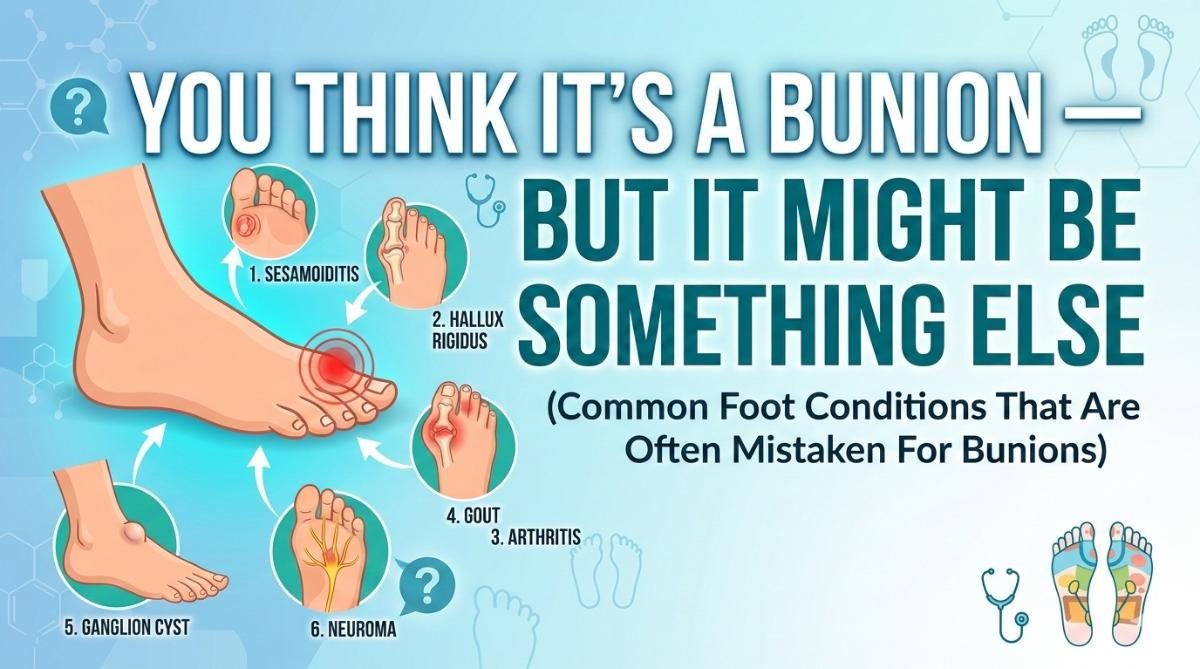
You Think It’s a Bunion — But It Might Be Something Else
(Common Foot Conditions That Are Often Mistaken for Bunions)
A bump near the base of the big toe is often assumed to be a bunion, one of the most common foot deformities seen by podiatrists. Bunions affect millions of people and can cause pain, swelling, and difficulty wearing certain shoes.
However, not every bump on the side of the foot is a bunion. Several other foot conditions can look very similar, leading many people to misdiagnose their symptoms and delay proper treatment.
At Total Foot & Ankle of Tampa Bay, our podiatrists frequently evaluate patients who believed they had a bunion but were actually dealing with a completely different condition. Identifying the correct diagnosis is essential for choosing the right treatment and preventing the problem from worsening.
Below are several foot conditions commonly mistaken for bunions and how to tell the difference.
What Is a Bunion?
A bunion (hallux valgus) occurs when the big toe gradually shifts toward the smaller toes, causing the joint at the base of the toe to protrude outward. Over time, this misalignment can lead to inflammation, pain, and difficulty walking.
Common symptoms of bunions include:
A visible bump on the side of the big toe joint
Redness and swelling around the joint
Pain while walking or wearing shoes
Restricted movement of the big toe
Calluses where the toes rub together
While bunions are common, other conditions can produce similar bumps, pain, or swelling in the same area.
1. Big Toe Joint Arthritis (Hallux Rigidus)
One condition frequently mistaken for a bunion is hallux rigidus, a form of arthritis that affects the joint at the base of the big toe.
Unlike a bunion, hallux rigidus typically causes stiffness and limited motion in the joint rather than a pronounced sideways deformity of the toe.
Symptoms may include:
Pain during walking or bending the toe
Stiffness in the big toe joint
Swelling around the joint
Difficulty pushing off when walking
Because the joint becomes arthritic and inflamed, the area may appear enlarged, leading some people to believe they have a bunion.
2. Ganglion Cysts
A ganglion cyst is a fluid-filled sac that can develop near joints or tendons in the foot. These cysts sometimes appear near the big toe joint, creating a lump that resembles a bunion.
Ganglion cysts are usually:
Soft or rubbery to the touch
Round or oval-shaped
Sometimes painful when pressed
Able to change size over time
Unlike bunions, ganglion cysts do not involve bone misalignment. Instead, they are benign growths filled with fluid.
A podiatrist can confirm the diagnosis through a physical examination and imaging when necessary.
3. Bursitis of the Big Toe
Bursitis occurs when the small fluid-filled sacs (bursae) that cushion joints become inflamed. When bursitis affects the big toe joint, it can produce swelling and tenderness that resembles a bunion.
Symptoms may include:
Swelling around the big toe joint
Warmth or redness in the area
Pain when wearing tight shoes
Tenderness when touching the joint
While bursitis sometimes occurs alongside bunions, it can also develop independently due to repetitive friction or pressure from footwear.
4. Gout
Gout is a form of inflammatory arthritis caused by a buildup of uric acid crystals in the joints. The big toe joint is one of the most common areas affected by gout attacks.
Because gout often causes sudden swelling and inflammation in the big toe joint, some patients believe they have developed a bunion.
However, gout symptoms tend to appear suddenly and intensely, often including:
Severe joint pain
Redness and swelling
Warmth around the joint
Difficulty walking
Gout attacks can occur rapidly, sometimes overnight, and require medical treatment to reduce inflammation and prevent recurrence.
5. Tailor’s Bunions (Bunionettes)
Another condition sometimes confused with a bunion is a tailor’s bunion, also known as a bunionette.
Unlike traditional bunions, which develop at the base of the big toe, tailor’s bunions form at the base of the little toe on the outside of the foot.
Symptoms may include:
A bump on the outside of the foot near the pinky toe
Pain when wearing tight or narrow shoes
Redness and irritation around the joint
Because the appearance is similar to a bunion but occurs in a different location, patients may mistakenly believe they have a standard bunion deformity.
6. Bone Spurs
A bone spur is an extra growth of bone that develops along the edges of joints. Bone spurs can form around the big toe joint due to arthritis or chronic joint stress.
When a bone spur develops in this area, it can create a bony lump that resembles a bunion.
Symptoms may include:
Joint stiffness
Pain when moving the big toe
Swelling around the joint
Difficulty wearing certain shoes
Unlike bunions, bone spurs do not necessarily involve a sideways shift of the toe.
7. Soft Tissue Masses or Tumors
Although rare, certain benign soft tissue masses can appear near the big toe joint and resemble a bunion.
These may include:
Lipomas (fatty growths)
Fibromas
Other noncancerous tissue masses
Because these conditions can mimic bunion symptoms, proper evaluation by a podiatrist is important to determine the exact cause.
Why Accurate Diagnosis Is Important
Misdiagnosing a foot condition as a bunion can lead to ineffective treatments and prolonged discomfort.
For example:
Stretching and orthotics may help bunions but not gout
Anti-inflammatory medication may relieve bursitis but not structural deformities
Cysts may require drainage or surgical removal
At Total Foot & Ankle of Tampa Bay, our podiatrists perform a thorough evaluation that may include:
Physical examination
Gait analysis
Digital X-rays
Advanced imaging when necessary
This approach ensures that patients receive the correct diagnosis and the most effective treatment plan.
Treatment Options for Bunion and Bunion-Like Conditions
Treatment depends on the underlying cause of the bump or pain.
Common treatment options may include:
Conservative care
Many conditions improve with non-surgical treatments such as:
Custom orthotics
Supportive footwear
Padding or protective devices
Anti-inflammatory medications
Physical therapy
Minimally invasive procedures
Some conditions may benefit from injections or minor procedures to reduce inflammation and pain.
Surgical correction
For severe bunions or structural deformities, surgical correction may be recommended to realign the joint and relieve pain.
Our podiatrists tailor each treatment plan to the patient’s specific diagnosis, lifestyle, and activity level.
When to See a Podiatrist
If you notice a bump on the side of your foot or experience persistent pain near the big toe joint, it is important to seek professional evaluation.
You should consider seeing a podiatrist if you experience:
Pain when walking or standing
Difficulty wearing normal shoes
Swelling or redness around the big toe joint
A bump that continues to grow
Limited movement in the big toe
Early diagnosis can prevent complications and help maintain healthy foot function.
Expert Foot Care Across Tampa Bay
If you believe you have a bunion or another foot condition, the specialists at Total Foot & Ankle of Tampa Bay are here to help.
Our experienced podiatrists provide comprehensive evaluation and treatment for bunions and other foot disorders.
We proudly serve patients at five convenient locations across Tampa Bay:
Brandon
Riverview
Wesley Chapel
Zephyrhills
Sun City Center
Our clinics offer advanced diagnostics, personalized treatment plans, and compassionate care designed to help patients return to comfortable, pain-free movement.
Don’t Ignore That Bump on Your Foot
A bump near the big toe is often assumed to be a bunion, but it may actually be another condition requiring different treatment.
If you are experiencing pain, swelling, or changes in the shape of your foot, a professional evaluation can provide clarity and relief.
At Total Foot & Ankle of Tampa Bay, our team is dedicated to helping patients understand their condition and find the best path toward healthier feet.
- posted: Mar. 09, 2026
You Think It’s a Bunion — But It Might Be Something Else
(Common Foot Conditions That Are Often Mistaken for Bunions)
A bump near the base of the big toe is often assumed to be a bunion, one of the most common foot deformities seen by podiatrists. Bunions affect millions of people and can cause pain, swelling, and difficulty wearing certain shoes.
However, not every bump on the side of the foot is a bunion. Several other foot conditions can look very similar, leading many people to misdiagnose their symptoms and delay proper treatment.
At Total Foot & Ankle of Tampa Bay, our podiatrists frequently evaluate patients who believed they had a bunion but were actually dealing with a completely different condition. Identifying the correct diagnosis is essential for choosing the right treatment and preventing the problem from worsening.
Below are several foot conditions commonly mistaken for bunions and how to tell the difference.
What Is a Bunion?
A bunion (hallux valgus) occurs when the big toe gradually shifts toward the smaller toes, causing the joint at the base of the toe to protrude outward. Over time, this misalignment can lead to inflammation, pain, and difficulty walking.
Common symptoms of bunions include:
A visible bump on the side of the big toe joint
Redness and swelling around the joint
Pain while walking or wearing shoes
Restricted movement of the big toe
Calluses where the toes rub together
While bunions are common, other conditions can produce similar bumps, pain, or swelling in the same area.
1. Big Toe Joint Arthritis (Hallux Rigidus)
One condition frequently mistaken for a bunion is hallux rigidus, a form of arthritis that affects the joint at the base of the big toe.
Unlike a bunion, hallux rigidus typically causes stiffness and limited motion in the joint rather than a pronounced sideways deformity of the toe.
Symptoms may include:
Pain during walking or bending the toe
Stiffness in the big toe joint
Swelling around the joint
Difficulty pushing off when walking
Because the joint becomes arthritic and inflamed, the area may appear enlarged, leading some people to believe they have a bunion.
2. Ganglion Cysts
A ganglion cyst is a fluid-filled sac that can develop near joints or tendons in the foot. These cysts sometimes appear near the big toe joint, creating a lump that resembles a bunion.
Ganglion cysts are usually:
Soft or rubbery to the touch
Round or oval-shaped
Sometimes painful when pressed
Able to change size over time
Unlike bunions, ganglion cysts do not involve bone misalignment. Instead, they are benign growths filled with fluid.
A podiatrist can confirm the diagnosis through a physical examination and imaging when necessary.
3. Bursitis of the Big Toe
Bursitis occurs when the small fluid-filled sacs (bursae) that cushion joints become inflamed. When bursitis affects the big toe joint, it can produce swelling and tenderness that resembles a bunion.
Symptoms may include:
Swelling around the big toe joint
Warmth or redness in the area
Pain when wearing tight shoes
Tenderness when touching the joint
While bursitis sometimes occurs alongside bunions, it can also develop independently due to repetitive friction or pressure from footwear.
4. Gout
Gout is a form of inflammatory arthritis caused by a buildup of uric acid crystals in the joints. The big toe joint is one of the most common areas affected by gout attacks.
Because gout often causes sudden swelling and inflammation in the big toe joint, some patients believe they have developed a bunion.
However, gout symptoms tend to appear suddenly and intensely, often including:
Severe joint pain
Redness and swelling
Warmth around the joint
Difficulty walking
Gout attacks can occur rapidly, sometimes overnight, and require medical treatment to reduce inflammation and prevent recurrence.
5. Tailor’s Bunions (Bunionettes)
Another condition sometimes confused with a bunion is a tailor’s bunion, also known as a bunionette.
Unlike traditional bunions, which develop at the base of the big toe, tailor’s bunions form at the base of the little toe on the outside of the foot.
Symptoms may include:
A bump on the outside of the foot near the pinky toe
Pain when wearing tight or narrow shoes
Redness and irritation around the joint
Because the appearance is similar to a bunion but occurs in a different location, patients may mistakenly believe they have a standard bunion deformity.
6. Bone Spurs
A bone spur is an extra growth of bone that develops along the edges of joints. Bone spurs can form around the big toe joint due to arthritis or chronic joint stress.
When a bone spur develops in this area, it can create a bony lump that resembles a bunion.
Symptoms may include:
Joint stiffness
Pain when moving the big toe
Swelling around the joint
Difficulty wearing certain shoes
Unlike bunions, bone spurs do not necessarily involve a sideways shift of the toe.
7. Soft Tissue Masses or Tumors
Although rare, certain benign soft tissue masses can appear near the big toe joint and resemble a bunion.
These may include:
Lipomas (fatty growths)
Fibromas
Other noncancerous tissue masses
Because these conditions can mimic bunion symptoms, proper evaluation by a podiatrist is important to determine the exact cause.
Why Accurate Diagnosis Is Important
Misdiagnosing a foot condition as a bunion can lead to ineffective treatments and prolonged discomfort.
For example:
Stretching and orthotics may help bunions but not gout
Anti-inflammatory medication may relieve bursitis but not structural deformities
Cysts may require drainage or surgical removal
At Total Foot & Ankle of Tampa Bay, our podiatrists perform a thorough evaluation that may include:
Physical examination
Gait analysis
Digital X-rays
Advanced imaging when necessary
This approach ensures that patients receive the correct diagnosis and the most effective treatment plan.
Treatment Options for Bunion and Bunion-Like Conditions
Treatment depends on the underlying cause of the bump or pain.
Common treatment options may include:
Conservative care
Many conditions improve with non-surgical treatments such as:
Custom orthotics
Supportive footwear
Padding or protective devices
Anti-inflammatory medications
Physical therapy
Minimally invasive procedures
Some conditions may benefit from injections or minor procedures to reduce inflammation and pain.
Surgical correction
For severe bunions or structural deformities, surgical correction may be recommended to realign the joint and relieve pain.
Our podiatrists tailor each treatment plan to the patient’s specific diagnosis, lifestyle, and activity level.
When to See a Podiatrist
If you notice a bump on the side of your foot or experience persistent pain near the big toe joint, it is important to seek professional evaluation.
You should consider seeing a podiatrist if you experience:
Pain when walking or standing
Difficulty wearing normal shoes
Swelling or redness around the big toe joint
A bump that continues to grow
Limited movement in the big toe
Early diagnosis can prevent complications and help maintain healthy foot function.
Expert Foot Care Across Tampa Bay
If you believe you have a bunion or another foot condition, the specialists at Total Foot & Ankle of Tampa Bay are here to help.
Our experienced podiatrists provide comprehensive evaluation and treatment for bunions and other foot disorders.
We proudly serve patients at five convenient locations across Tampa Bay:
Brandon
Riverview
Wesley Chapel
Zephyrhills
Sun City Center
Our clinics offer advanced diagnostics, personalized treatment plans, and compassionate care designed to help patients return to comfortable, pain-free movement.
Don’t Ignore That Bump on Your Foot
A bump near the big toe is often assumed to be a bunion, but it may actually be another condition requiring different treatment.
If you are experiencing pain, swelling, or changes in the shape of your foot, a professional evaluation can provide clarity and relief.
At Total Foot & Ankle of Tampa Bay, our team is dedicated to helping patients understand their condition and find the best path toward healthier feet.