
- posted: Mar. 23, 2026
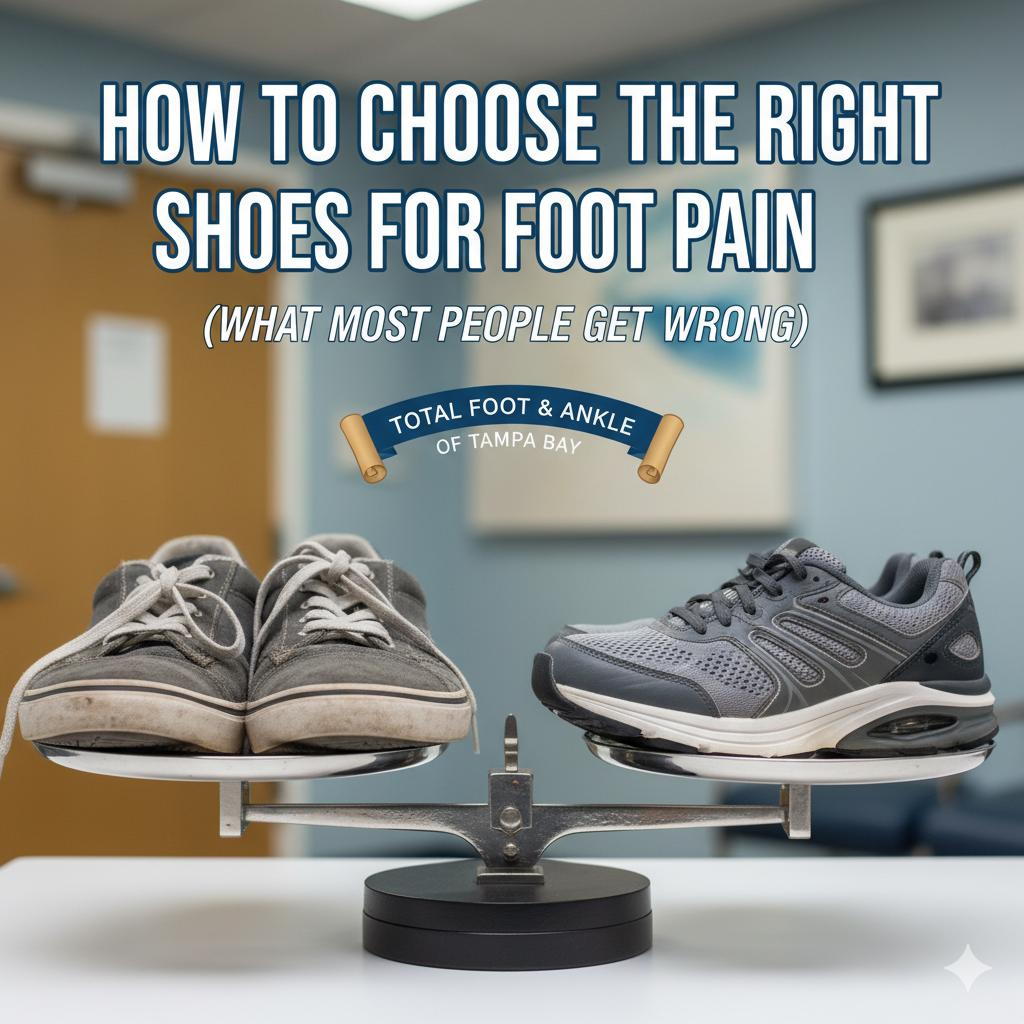
How to Choose the Right Shoes for Foot Pain (What Most People Get Wrong)
(And Why the Wrong Shoes Could Be Making Your Pain Worse)
Foot pain is one of the most common complaints we see at podiatry clinics—and in many cases, the root cause isn’t an injury. It’s your shoes.
Whether you’re dealing with heel pain, plantar fasciitis, arch pain, or general foot discomfort, wearing the wrong footwear can make symptoms worse and delay healing. Unfortunately, many people unknowingly choose shoes based on style, habit, or convenience rather than proper support.
At Total Foot & Ankle of Tampa Bay, we regularly treat patients whose pain improves significantly once they switch to the right footwear—or combine it with custom orthotics.
If you’re wondering how to choose the right shoes for foot pain, here’s what you need to know—and the common mistakes to avoid.
Why Shoes Matter More Than You Think
Every step you take puts pressure on your feet. In fact, walking can place 1.5 times your body weight on your feet, and running even more.
The right shoes help:
- Absorb shock
- Support your arch
- Stabilize your foot alignment
- Reduce strain on ligaments and joints
The wrong shoes? They do the opposite—increasing stress on your plantar fascia, heel, and joints, which can lead to chronic pain.
What Most People Get Wrong About Shoes
Before we talk about what to look for, let’s address the most common mistakes people make.
❌ Choosing Style Over Support
Many people prioritize how shoes look instead of how they function. Flat shoes, narrow styles, or trendy footwear often lack proper support.
❌ Wearing Worn-Out Shoes
Shoes lose their support over time. Even if they look fine, worn-out soles and cushioning can contribute to foot pain.
❌ Assuming All “Comfort Shoes” Are Supportive
Not all cushioned shoes provide proper arch support. Soft doesn’t always mean supportive.
❌ Wearing Flip-Flops Daily (Florida Problem 👀)
In Florida, it’s common to wear sandals or flip-flops year-round. While convenient, most provide little to no arch support, making them a major contributor to heel pain and plantar fasciitis.
How to Choose the Right Shoes for Foot Pain
Choosing the right footwear doesn’t have to be complicated—but there are key features you should always look for.
1. Look for Proper Arch Support
Your arch plays a critical role in how your foot absorbs impact. Without proper support, the plantar fascia becomes strained.
Good shoes should:
- Match your arch type (flat, neutral, high arch)
- Provide firm—not overly soft—support
- Help distribute pressure evenly
If your shoes lack arch support, your foot has to compensate—and that leads to pain.
2. Choose Cushioned Heels for Shock Absorption
Heel pain, especially from plantar fasciitis, often worsens with impact.
Look for shoes with:
- Cushioned heel padding
- Shock-absorbing midsoles
- Slight heel elevation (not completely flat)
This helps reduce pressure on the heel with every step.
3. Make Sure the Shoe Is Stable
A good shoe should not bend or twist too easily.
Test this by:
- Trying to twist the shoe (it should resist)
- Bending it at the toe (not in the middle)
Stability helps control foot movement and prevents excessive strain on ligaments.
4. Check the Fit (This Is Huge)
Even the best shoe won’t help if it doesn’t fit properly.
Make sure:
- There’s enough room in the toe box
- The shoe isn’t too tight or too loose
- Your heel stays secure when walking
Poor fit can lead to pressure points, inflammation, and worsening foot pain.
5. Replace Your Shoes Regularly
Most people wear shoes far longer than they should.
General rule:
- Walking/running shoes: replace every 300–500 miles
- Everyday shoes: replace when support starts to wear down
Worn-out shoes lose their ability to support your foot, even if they still look okay.
When Shoes Alone Aren’t Enough
Even with the best shoes, some patients continue to experience foot pain. That’s because every foot is different.
This is where custom orthotics come in.
Why Custom Orthotics Make a Big Difference
At Total Foot & Ankle of Tampa Bay, we often recommend custom orthotics for patients with:
- Plantar fasciitis
- Heel pain
- Flat feet or high arches
- Chronic foot or ankle pain
- Poor foot mechanics
Unlike over-the-counter inserts, custom orthotics are designed specifically for your foot structure.
They help:
- Correct alignment issues
- Reduce strain on the plantar fascia
- Improve shock absorption
- Provide consistent support throughout the day
For many patients, orthotics combined with proper footwear provide long-term relief—not just temporary fixes.
Florida Lifestyle: Why Foot Pain Is More Common
Living in Florida comes with lifestyle habits that can increase foot pain:
- Frequent use of flip-flops or sandals
- Walking on hard surfaces (tile, pavement)
- Long periods of standing or outdoor activity
- Year-round walking and running
While staying active is great, it’s important to protect your feet with proper support and footwear choices.
When to See a Podiatrist
If your foot pain continues despite changing shoes, it may be time for a professional evaluation.
You should consider seeing a podiatrist if you have:
- Heel pain lasting more than 2–3 weeks
- Pain that worsens with walking or activity
- Arch pain or instability
- Difficulty standing for long periods
- Recurring foot discomfort
Ignoring foot pain can lead to more serious issues over time.
Expert Foot Care Across Tampa Bay
If you’re unsure which shoes are right for you—or if your foot pain isn’t improving—the specialists at Total Foot & Ankle of Tampa Bay can help.
We provide:
- Comprehensive foot evaluations
- Gait and biomechanical analysis
- Personalized footwear recommendations
- Custom orthotics designed for your specific needs
We proudly serve patients at five convenient locations across Tampa Bay:
- Brandon
- Riverview
- Wesley Chapel
- Zephyrhills
- Sun City Center
Our goal is simple: help you walk comfortably, stay active, and live pain-free.
The Bottom Line
Choosing the right shoes is one of the most important steps you can take to reduce foot pain. But what most people get wrong is assuming any comfortable shoe will solve the problem.
In reality, the right combination of:
- Supportive footwear
- Proper fit
- Activity modification
- And, when needed, custom orthotics
…is what truly leads to long-term relief.
If your foot pain isn’t improving, don’t guess—get the right diagnosis and treatment plan.
- posted: Mar. 23, 2026
How to Choose the Right Shoes for Foot Pain (What Most People Get Wrong)
(And Why the Wrong Shoes Could Be Making Your Pain Worse)
Foot pain is one of the most common complaints we see at podiatry clinics—and in many cases, the root cause isn’t an injury. It’s your shoes.
Whether you’re dealing with heel pain, plantar fasciitis, arch pain, or general foot discomfort, wearing the wrong footwear can make symptoms worse and delay healing. Unfortunately, many people unknowingly choose shoes based on style, habit, or convenience rather than proper support.
At Total Foot & Ankle of Tampa Bay, we regularly treat patients whose pain improves significantly once they switch to the right footwear—or combine it with custom orthotics.
If you’re wondering how to choose the right shoes for foot pain, here’s what you need to know—and the common mistakes to avoid.
Why Shoes Matter More Than You Think
Every step you take puts pressure on your feet. In fact, walking can place 1.5 times your body weight on your feet, and running even more.
The right shoes help:
- Absorb shock
- Support your arch
- Stabilize your foot alignment
- Reduce strain on ligaments and joints
The wrong shoes? They do the opposite—increasing stress on your plantar fascia, heel, and joints, which can lead to chronic pain.
What Most People Get Wrong About Shoes
Before we talk about what to look for, let’s address the most common mistakes people make.
❌ Choosing Style Over Support
Many people prioritize how shoes look instead of how they function. Flat shoes, narrow styles, or trendy footwear often lack proper support.
❌ Wearing Worn-Out Shoes
Shoes lose their support over time. Even if they look fine, worn-out soles and cushioning can contribute to foot pain.
❌ Assuming All “Comfort Shoes” Are Supportive
Not all cushioned shoes provide proper arch support. Soft doesn’t always mean supportive.
❌ Wearing Flip-Flops Daily (Florida Problem 👀)
In Florida, it’s common to wear sandals or flip-flops year-round. While convenient, most provide little to no arch support, making them a major contributor to heel pain and plantar fasciitis.
How to Choose the Right Shoes for Foot Pain
Choosing the right footwear doesn’t have to be complicated—but there are key features you should always look for.
1. Look for Proper Arch Support
Your arch plays a critical role in how your foot absorbs impact. Without proper support, the plantar fascia becomes strained.
Good shoes should:
- Match your arch type (flat, neutral, high arch)
- Provide firm—not overly soft—support
- Help distribute pressure evenly
If your shoes lack arch support, your foot has to compensate—and that leads to pain.
2. Choose Cushioned Heels for Shock Absorption
Heel pain, especially from plantar fasciitis, often worsens with impact.
Look for shoes with:
- Cushioned heel padding
- Shock-absorbing midsoles
- Slight heel elevation (not completely flat)
This helps reduce pressure on the heel with every step.
3. Make Sure the Shoe Is Stable
A good shoe should not bend or twist too easily.
Test this by:
- Trying to twist the shoe (it should resist)
- Bending it at the toe (not in the middle)
Stability helps control foot movement and prevents excessive strain on ligaments.
4. Check the Fit (This Is Huge)
Even the best shoe won’t help if it doesn’t fit properly.
Make sure:
- There’s enough room in the toe box
- The shoe isn’t too tight or too loose
- Your heel stays secure when walking
Poor fit can lead to pressure points, inflammation, and worsening foot pain.
5. Replace Your Shoes Regularly
Most people wear shoes far longer than they should.
General rule:
- Walking/running shoes: replace every 300–500 miles
- Everyday shoes: replace when support starts to wear down
Worn-out shoes lose their ability to support your foot, even if they still look okay.
When Shoes Alone Aren’t Enough
Even with the best shoes, some patients continue to experience foot pain. That’s because every foot is different.
This is where custom orthotics come in.
Why Custom Orthotics Make a Big Difference
At Total Foot & Ankle of Tampa Bay, we often recommend custom orthotics for patients with:
- Plantar fasciitis
- Heel pain
- Flat feet or high arches
- Chronic foot or ankle pain
- Poor foot mechanics
Unlike over-the-counter inserts, custom orthotics are designed specifically for your foot structure.
They help:
- Correct alignment issues
- Reduce strain on the plantar fascia
- Improve shock absorption
- Provide consistent support throughout the day
For many patients, orthotics combined with proper footwear provide long-term relief—not just temporary fixes.
Florida Lifestyle: Why Foot Pain Is More Common
Living in Florida comes with lifestyle habits that can increase foot pain:
- Frequent use of flip-flops or sandals
- Walking on hard surfaces (tile, pavement)
- Long periods of standing or outdoor activity
- Year-round walking and running
While staying active is great, it’s important to protect your feet with proper support and footwear choices.
When to See a Podiatrist
If your foot pain continues despite changing shoes, it may be time for a professional evaluation.
You should consider seeing a podiatrist if you have:
- Heel pain lasting more than 2–3 weeks
- Pain that worsens with walking or activity
- Arch pain or instability
- Difficulty standing for long periods
- Recurring foot discomfort
Ignoring foot pain can lead to more serious issues over time.
Expert Foot Care Across Tampa Bay
If you’re unsure which shoes are right for you—or if your foot pain isn’t improving—the specialists at Total Foot & Ankle of Tampa Bay can help.
We provide:
- Comprehensive foot evaluations
- Gait and biomechanical analysis
- Personalized footwear recommendations
- Custom orthotics designed for your specific needs
We proudly serve patients at five convenient locations across Tampa Bay:
- Brandon
- Riverview
- Wesley Chapel
- Zephyrhills
- Sun City Center
Our goal is simple: help you walk comfortably, stay active, and live pain-free.
The Bottom Line
Choosing the right shoes is one of the most important steps you can take to reduce foot pain. But what most people get wrong is assuming any comfortable shoe will solve the problem.
In reality, the right combination of:
- Supportive footwear
- Proper fit
- Activity modification
- And, when needed, custom orthotics
…is what truly leads to long-term relief.
If your foot pain isn’t improving, don’t guess—get the right diagnosis and treatment plan.