
- posted: Mar. 23, 2026
What Does Neuropathy in the Feet Feel Like?
(Early Warning Signs You Shouldn’t Ignore)
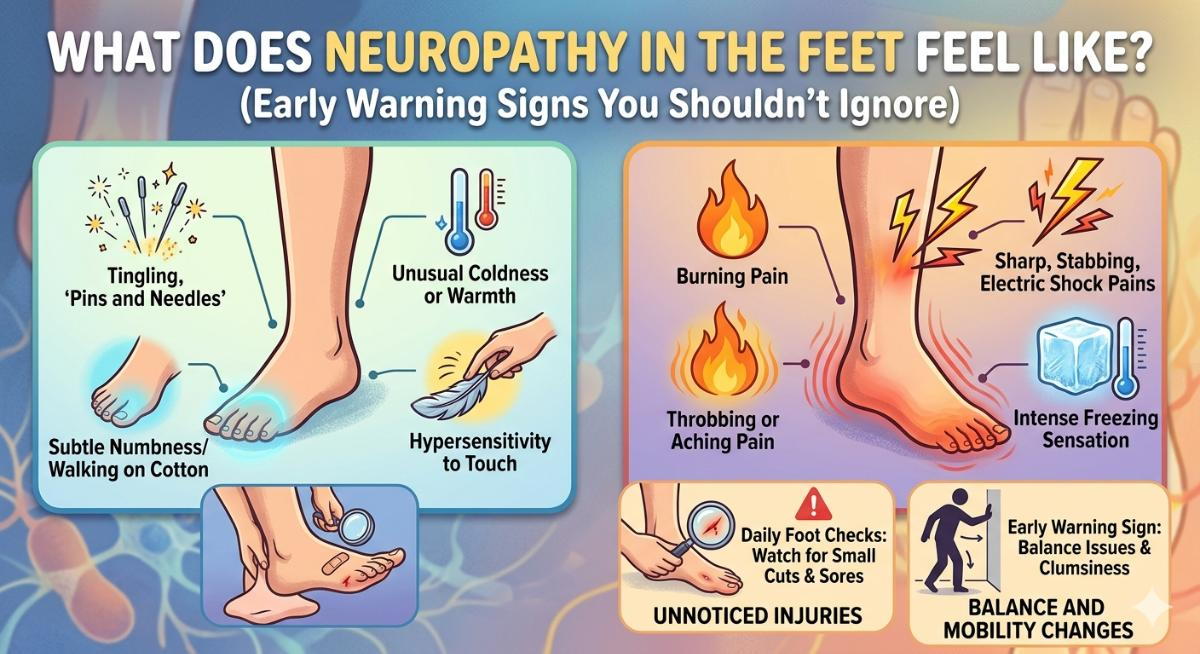
Neuropathy in the feet is a condition that affects the nerves, often causing unusual sensations that many people struggle to describe. Some patients say it feels like tingling, burning, numbness, or even walking on pins and needles. Others notice a loss of feeling altogether.
Because symptoms can start gradually, neuropathy is often ignored in the early stages. However, recognizing the warning signs early is critical. Left untreated, neuropathy can worsen over time and lead to serious complications.
At Total Foot & Ankle of Tampa Bay, our podiatrists regularly diagnose and treat neuropathy in patients across the area. Understanding what neuropathy feels like can help you take action sooner and protect your long-term foot health.
What Is Neuropathy?
Neuropathy, also known as peripheral neuropathy, occurs when the nerves that send signals between your brain, spinal cord, and feet become damaged or impaired.
These nerves are responsible for:
- Sensation (feeling pain, temperature, touch)
- Movement (muscle control)
- Balance and coordination
When these nerves don’t function properly, it can lead to a wide range of symptoms—many of which begin in the feet.
What Does Neuropathy in the Feet Feel Like?
Neuropathy doesn’t feel the same for everyone, but there are several common sensations patients report.
1. Tingling or “Pins and Needles”
One of the earliest signs of neuropathy is a tingling sensation, often described as pins and needles.
This feeling may:
- Come and go at first
- Be more noticeable at night
- Start in the toes and gradually spread
Many people ignore this symptom, assuming it’s temporary—but persistent tingling can be an early warning sign of nerve damage.
2. Burning Sensation
Some patients experience a burning feeling in the feet, even when there is no visible injury.
This sensation can feel like:
- Heat radiating from the bottom of the feet
- A constant burning discomfort
- Increased sensitivity to touch or pressure
Burning pain is often more noticeable at night and can interfere with sleep.
3. Numbness
Numbness is another common symptom of neuropathy and can be particularly concerning.
Patients may feel:
- Reduced sensation in the toes or feet
- Difficulty feeling the ground while walking
- A “dead” or heavy feeling in the feet
As numbness progresses, it can increase the risk of injuries going unnoticed.
4. Sharp or Shooting Pain
Neuropathy can also cause sharp, stabbing, or shooting pain.
This type of pain may:
- Occur suddenly
- Travel along the foot or up the leg
- Feel electric or jolt-like
These sensations are caused by abnormal nerve signaling and can vary in intensity.
5. Sensitivity to Touch
Some individuals with neuropathy develop heightened sensitivity, where even light touch can feel painful.
For example:
- Bedsheets touching the feet may feel uncomfortable
- Wearing socks or shoes may cause irritation
- Gentle pressure may trigger pain
This condition is known as allodynia and is a sign of nerve dysfunction.
6. Loss of Balance or Coordination
Because nerves play a role in balance, neuropathy can make it harder to stay steady while walking.
You may notice:
- Feeling unsteady on your feet
- Difficulty walking in the dark
- Increased risk of falls
This occurs because the brain is not receiving accurate signals from the feet.
What Causes Neuropathy in the Feet?
Neuropathy can develop for several reasons. Some of the most common causes include:
- Diabetes (one of the leading causes)
- Poor circulation
- Vitamin deficiencies
- Nerve compression or injury
- Chronic medical conditions
- Certain medications
Identifying the underlying cause is essential for effective treatment.
Why Early Detection Is Important
Neuropathy often starts with mild symptoms but can worsen over time if left untreated.
Potential complications include:
- Increased risk of foot injuries
- Slow-healing wounds or ulcers
- Infections
- Balance problems and falls
Early diagnosis allows for better management and can help prevent serious complications.
When Should You See a Podiatrist?
You should consider seeing a podiatrist if you experience:
- Persistent tingling or numbness in your feet
- Burning or unusual sensations
- Sharp or shooting foot pain
- Loss of balance or coordination
- Symptoms that worsen over time
Even mild symptoms should not be ignored, especially if they continue or become more frequent.
How Neuropathy Is Diagnosed
At Total Foot & Ankle of Tampa Bay, our podiatrists perform a thorough evaluation to determine whether neuropathy is present.
This may include:
- Sensory testing
- Physical examination
- Gait analysis
- Diagnostic imaging or additional testing if needed
Our goal is to identify the cause and severity of the condition to create an effective treatment plan.
Treatment Options for Neuropathy
Treatment depends on the underlying cause and severity of symptoms.
Common treatment approaches may include:
- Managing underlying conditions (such as diabetes)
- Medications to reduce nerve pain
- Lifestyle and dietary changes
- Custom orthotics to improve foot support
- Preventive foot care to reduce injury risk
Early treatment can significantly improve quality of life and help prevent complications.
Expert Neuropathy Care Across Tampa Bay
If you’re experiencing symptoms of neuropathy, the specialists at Total Foot & Ankle of Tampa Bay are here to help.
We provide comprehensive care for nerve-related foot conditions and focus on early detection and personalized treatment.
We proudly serve patients at five convenient locations:
- Brandon
- Riverview
- Wesley Chapel
- Zephyrhills
- Sun City Center
Our team is dedicated to helping patients maintain healthy feet and stay active.
Don’t Ignore the Warning Signs
Neuropathy in the feet often starts with subtle symptoms—but those early signs are your body’s way of signaling that something isn’t right.
If you’re experiencing tingling, burning, numbness, or unusual foot sensations, it’s important to seek professional care.
At Total Foot & Ankle of Tampa Bay, we’re here to help you understand your symptoms, identify the cause, and guide you toward effective treatment.
- posted: Mar. 23, 2026
What Does Neuropathy in the Feet Feel Like?
(Early Warning Signs You Shouldn’t Ignore)
Neuropathy in the feet is a condition that affects the nerves, often causing unusual sensations that many people struggle to describe. Some patients say it feels like tingling, burning, numbness, or even walking on pins and needles. Others notice a loss of feeling altogether.
Because symptoms can start gradually, neuropathy is often ignored in the early stages. However, recognizing the warning signs early is critical. Left untreated, neuropathy can worsen over time and lead to serious complications.
At Total Foot & Ankle of Tampa Bay, our podiatrists regularly diagnose and treat neuropathy in patients across the area. Understanding what neuropathy feels like can help you take action sooner and protect your long-term foot health.
What Is Neuropathy?
Neuropathy, also known as peripheral neuropathy, occurs when the nerves that send signals between your brain, spinal cord, and feet become damaged or impaired.
These nerves are responsible for:
- Sensation (feeling pain, temperature, touch)
- Movement (muscle control)
- Balance and coordination
When these nerves don’t function properly, it can lead to a wide range of symptoms—many of which begin in the feet.
What Does Neuropathy in the Feet Feel Like?
Neuropathy doesn’t feel the same for everyone, but there are several common sensations patients report.
1. Tingling or “Pins and Needles”
One of the earliest signs of neuropathy is a tingling sensation, often described as pins and needles.
This feeling may:
- Come and go at first
- Be more noticeable at night
- Start in the toes and gradually spread
Many people ignore this symptom, assuming it’s temporary—but persistent tingling can be an early warning sign of nerve damage.
2. Burning Sensation
Some patients experience a burning feeling in the feet, even when there is no visible injury.
This sensation can feel like:
- Heat radiating from the bottom of the feet
- A constant burning discomfort
- Increased sensitivity to touch or pressure
Burning pain is often more noticeable at night and can interfere with sleep.
3. Numbness
Numbness is another common symptom of neuropathy and can be particularly concerning.
Patients may feel:
- Reduced sensation in the toes or feet
- Difficulty feeling the ground while walking
- A “dead” or heavy feeling in the feet
As numbness progresses, it can increase the risk of injuries going unnoticed.
4. Sharp or Shooting Pain
Neuropathy can also cause sharp, stabbing, or shooting pain.
This type of pain may:
- Occur suddenly
- Travel along the foot or up the leg
- Feel electric or jolt-like
These sensations are caused by abnormal nerve signaling and can vary in intensity.
5. Sensitivity to Touch
Some individuals with neuropathy develop heightened sensitivity, where even light touch can feel painful.
For example:
- Bedsheets touching the feet may feel uncomfortable
- Wearing socks or shoes may cause irritation
- Gentle pressure may trigger pain
This condition is known as allodynia and is a sign of nerve dysfunction.
6. Loss of Balance or Coordination
Because nerves play a role in balance, neuropathy can make it harder to stay steady while walking.
You may notice:
- Feeling unsteady on your feet
- Difficulty walking in the dark
- Increased risk of falls
This occurs because the brain is not receiving accurate signals from the feet.
What Causes Neuropathy in the Feet?
Neuropathy can develop for several reasons. Some of the most common causes include:
- Diabetes (one of the leading causes)
- Poor circulation
- Vitamin deficiencies
- Nerve compression or injury
- Chronic medical conditions
- Certain medications
Identifying the underlying cause is essential for effective treatment.
Why Early Detection Is Important
Neuropathy often starts with mild symptoms but can worsen over time if left untreated.
Potential complications include:
- Increased risk of foot injuries
- Slow-healing wounds or ulcers
- Infections
- Balance problems and falls
Early diagnosis allows for better management and can help prevent serious complications.
When Should You See a Podiatrist?
You should consider seeing a podiatrist if you experience:
- Persistent tingling or numbness in your feet
- Burning or unusual sensations
- Sharp or shooting foot pain
- Loss of balance or coordination
- Symptoms that worsen over time
Even mild symptoms should not be ignored, especially if they continue or become more frequent.
How Neuropathy Is Diagnosed
At Total Foot & Ankle of Tampa Bay, our podiatrists perform a thorough evaluation to determine whether neuropathy is present.
This may include:
- Sensory testing
- Physical examination
- Gait analysis
- Diagnostic imaging or additional testing if needed
Our goal is to identify the cause and severity of the condition to create an effective treatment plan.
Treatment Options for Neuropathy
Treatment depends on the underlying cause and severity of symptoms.
Common treatment approaches may include:
- Managing underlying conditions (such as diabetes)
- Medications to reduce nerve pain
- Lifestyle and dietary changes
- Custom orthotics to improve foot support
- Preventive foot care to reduce injury risk
Early treatment can significantly improve quality of life and help prevent complications.
Expert Neuropathy Care Across Tampa Bay
If you’re experiencing symptoms of neuropathy, the specialists at Total Foot & Ankle of Tampa Bay are here to help.
We provide comprehensive care for nerve-related foot conditions and focus on early detection and personalized treatment.
We proudly serve patients at five convenient locations:
- Brandon
- Riverview
- Wesley Chapel
- Zephyrhills
- Sun City Center
Our team is dedicated to helping patients maintain healthy feet and stay active.
Don’t Ignore the Warning Signs
Neuropathy in the feet often starts with subtle symptoms—but those early signs are your body’s way of signaling that something isn’t right.
If you’re experiencing tingling, burning, numbness, or unusual foot sensations, it’s important to seek professional care.
At Total Foot & Ankle of Tampa Bay, we’re here to help you understand your symptoms, identify the cause, and guide you toward effective treatment.