Dental Implants Boca Raton, FL
People are living longer than ever, and while regular brushing, flossing, and checkups allow many of us to maintain our natural smiles for a lifetime, sometimes our teeth just can't keep up. If you've lost a tooth (or a few teeth) due to injury or disease, dental implants from Mission Bay Family Dentistry can rejuvenate both your smile and your oral health. Read on to learn more about implant dentistry or call our office today at (561) 488-5772 to schedule a consultation with Dr. Gary D. Levine DDS, PA, our implant dentist in Boca Raton, FL.
What are dental implants?
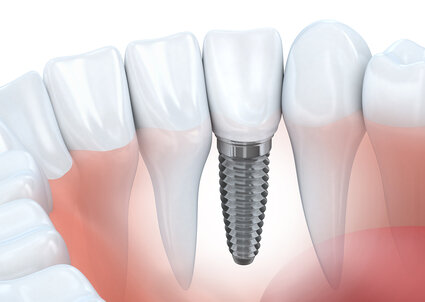
Dental implants offer a modern, transformative solution for individuals missing one or more teeth. An implant is a synthetic tooth root in the shape of a post that is surgically placed into the jawbone. The “root” is usually made of titanium: the same material used in many replacement hips and knees, and a metal that is well-suited to pairing with human bone. A replacement tooth is then fixed to the post. The tooth can be either permanently attached or removable. Permanent teeth are more stable and feel more like natural teeth.
Single Or Multiple Implants
Dental implants are versatile. If you are only missing one tooth, one implant plus one replacement tooth will do the trick. If you are missing several teeth in a row, a few strategically placed implants can support a permanent bridge (a set of replacement teeth). Similarly, if you have lost all of your teeth, a full bridge or full denture can be permanently fixed in your mouth with a strategic number of implants.
Advantages Over Dentures or Bridges
Conventional bridges and dentures are not fixed to the bone, and can therefore be unstable. This can make it difficult to eat or smile with confidence. Dental implants not only look more natural, but feel and act more like normal teeth, with a stronger biting force. And because they don't directly rely on neighboring teeth for support, implants don't compromise the health of your natural teeth. In fact, dental bridges are only expected to last seven to ten years, even less with root canals, whereas implants will typically last a lifetime.
Dental Implant Materials

A dental implant is composed of three main parts: the implant post, the abutment, and the prosthetic crown.
- Implant Post: This is the foundation of the dental implant, typically made of titanium or titanium alloy, which is biocompatible and integrates well with the jawbone. It effectively becomes the root of the new tooth.
- Abutment: Once the implant post has fully integrated with the jawbone, an abutment is attached to it. The abutment is a small connector piece that protrudes above the gum line and serves as a link between the implant post and the restoration. It can be made from various materials, including titanium, gold, or ceramic.
- Implant Restoration: The final part of the dental implant is the restoration (replacement tooth), which is custom-made to match the shape, size, and color of a patient's natural teeth. The most common materials used for implant restorations include zirconia and various ceramics. Each material has its own advantages and is chosen based on specific patient needs and the location of the implant.
The Ideal Implant Candidate
While a thorough evaluation by Dr. Gary Levine, our implant dentist in Boca Raton, FL, is essential to determine if a patient is a suitable candidate for dental implants, the ideal patient will have:
- Good General Health: Candidates should be in overall good health to undergo the surgical procedure required for dental implants. Certain medical conditions, such as uncontrolled diabetes, heart disease, or autoimmune disorders, might complicate the healing process and require special consideration.
- Sufficient Jawbone Density: Adequate jawbone density is crucial for the success of dental implants, as the implant posts need a solid foundation for osseointegration. Patients with significant bone loss may need bone grafting procedures before implants can be placed.
- Healthy Gums: Healthy gums are essential because periodontal disease can affect the stability and success of the implant. Candidates should have good oral hygiene and be free of active gum disease.
- Non-Smokers: Smoking can impair healing and increase the risk of implant failure. Non-smokers or those willing to quit smoking during the implant process are better candidates for successful implant integration.
- Commitment to Oral Hygiene: Candidates should be committed to maintaining excellent oral hygiene and regular dental visits to ensure the long-term success of their implants. Proper care and maintenance are vital to prevent infections and other complications.
Post-Treatment Care
Consider your replacement teeth to be the same as natural teeth. They require the same daily brushing and flossing, and the same amount of regular checkups. Just like your natural teeth, the better you take care of your replacements, the longer they will last.