
Rubber Band Ligation for Hemorrhoids
Topic Contents
Treatment Overview
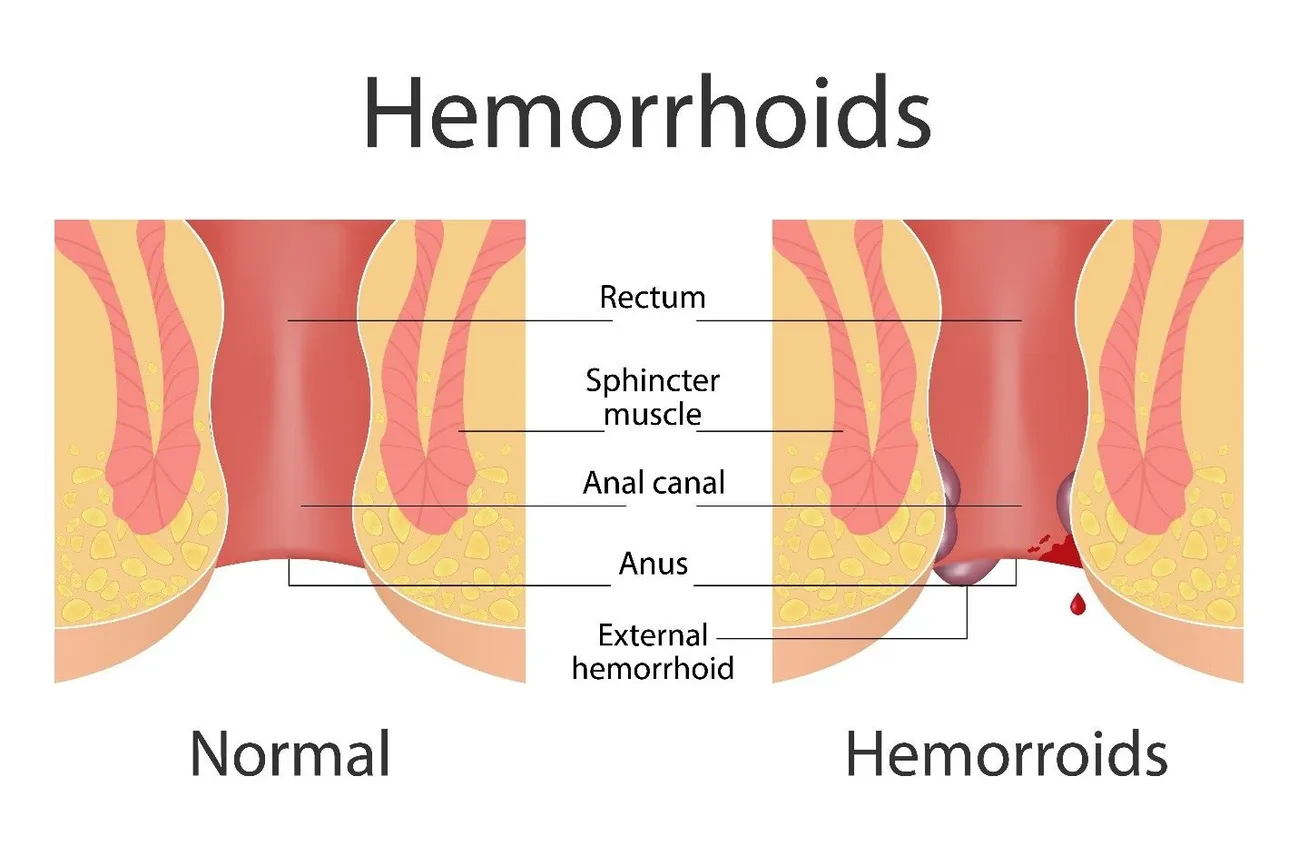
Rubber band ligation is a procedure in which the hemorrhoid is tied off at its base with rubber bands, cutting off the blood flow to the hemorrhoid. This treatment is only for internal hemorrhoids.
To do this procedure, a doctor inserts a viewing scope (anoscope) into the anus. The hemorrhoid is grasped with a small tool. Then a device places a rubber band around the base of the hemorrhoid. The hemorrhoid then shrinks and dies and, in about a week, falls off.
A scar will form in place of the hemorrhoid. The scar will hold nearby veins so they don't bulge into the anal canal.
The procedure is done in a doctor's office. You will be asked if the rubber bands feel too tight. If the bands are extremely painful, a medicine may be injected into the banded hemorrhoids to numb them.
The procedure takes about 30 minutes. You can go home when it's done. Some people are able to return to regular activities right away. Others may need to take a few days off from work.
After the procedure, you may feel pain and have a sensation of fullness in your lower belly. Or you may feel as if you need to have a bowel movement.
Make sure not to lift anything heavy until you heal. It's also important not to strain when you have a bowel movement.
Treatment is limited to 1 to 2 hemorrhoids at a time if done in the doctor's office. Several hemorrhoids may be treated at one time if the person has general anesthesia. More areas may be treated at 4- to 6-week intervals.
What To Expect
After the procedure, you may feel pain and have a feeling of fullness in your lower belly. Or you may feel as if you need to have a bowel movement. This usually goes away after several days. You may need pain medicine during this time.
You may have a small amount of bleeding from your anus about 7 to 10 days after surgery, when your hemorrhoid falls off. This is normal.
Some people are able to return to regular activities right away. Others may need to take a few days off from work.
You will need to avoid heavy lifting and straining with bowel movements while you recover.
Why It Is Done
Rubber band ligation is the most widely used treatment for internal hemorrhoids. If you still have symptoms after three or four treatments, surgery may be considered.
Rubber band ligation cannot be used if there is not enough tissue to pull into the banding device. This procedure is almost never appropriate for fourth-degree hemorrhoids.
Learn more
How Well It Works
Rubber band ligation works for about 8 out of 10 people. People who have this treatment are less likely to need another treatment compared to people who have coagulation treatments. About 1 out of 10 people may need surgery.footnote1
Risks
Side effects are rare but include:
- Severe pain that does not respond to the methods of pain relief used after this procedure. The bands may be too close to the area in the anal canal that contains pain sensors.
- Bleeding from the anus.
- Inability to pass urine (urinary retention).
- Infection in the anal area.
Other Procedures Used to Treat Hemorrhoids
Hemorrhoid banding is not the only option for treating hemorrhoids, although it is highly effective and the most common procedure to remove internal hemorrhoids. Doctors may recommend other treatment methods if the hemorrhoids are too small or too large for rubber band ligation. Other hemorrhoid procedures include:
Conventional Surgery
The surgical removal of a hemorrhoid is called a hemorrhoidectomy. During a hemorrhoidectomy, the doctor makes incisions in the tissue around the hemorrhoid and ties off the swollen vein inside the hemorrhoid to prevent bleeding. The doctor then removes the hemorrhoid and may or may not sew the area closed. They’ll then cover the wound with medicated gauze. Before undergoing a hemorrhoidectomy, the patient may receive general anesthesia to keep them from feeling pain.
Surgeons might use a scalpel, cautery pencil or a laser to perform a hemorrhoidectomy. This procedure is typically done in a surgery center or hospital. Patients can expect surgery itself to last 40 to 90 minutes.
Patients who undergo hemorrhoid surgery will need someone to drive them home from the procedure due to the effects of anesthesia. They’ll also need to eat a bland diet for a few days after surgery and use ice packs, warm-water baths and medication to relieve pain. In some cases, doctors give patients antibiotics to prevent an infection.
Hemorrhoid surgery is more expensive than hemorrhoid banding, involves a longer recovery time, has a higher risk of complications and is typically more painful. Some patients may need to stay in the hospital for a few days after the procedure due to pain, and overall, it can take over a month to recover. Doctors usually do not recommend a hemorrhoidectomy unless a patient has very large internal or external hemorrhoids.
Coagulation Therapy
Coagulation therapy, also known as infrared photocoagulation, uses heat to cut off the hemorrhoid’s blood supply. During this procedure, the doctor uses a device that creates a powerful beam of infrared light, which then heats the hemorrhoid. The process may take 30 seconds to three minutes.
Doctors might recommend coagulation therapy to treat small hemorrhoids that do not respond to home remedies. This procedure can be completed in a doctor’s office, and it may cause pain. The patient might also sense heat during the procedure. Coagulation therapy is expensive, and only one hemorrhoid can be treated at a time.
Sclerotherapy
If patients have hemorrhoids that are too small for rubber band ligation, their doctor might suggest sclerotherapy. During sclerotherapy, the doctor injects the hemorrhoid with a chemical, which causes it to fall off eventually.
Patients commonly experience pain after undergoing sclerotherapy. Sclerotherapy also requires a high level of skill because if the doctor injects the substance into the wrong area, the patient can experience serious complications.
Cryosurgery
During cryosurgery, the doctor freezes the hemorrhoid with a cryoprobe and nitrous oxide or liquid nitrogen. In about three weeks, the hemorrhoid falls off.
Patients usually experience pain after cryosurgery, and there’s a risk of infection. Due to the increased complication risks related to this procedure, most doctors choose other forms of hemorrhoid treatment instead.
Stapling
Stapling is a surgical technique used to treat large, prolapsed hemorrhoids. During a stapling procedure, the doctor uses instruments to push the hemorrhoidal tissue back to its original location in the anal canal and staple it in place. The process may take anywhere from 15 to 90 minutes.
Although stapling is less painful than traditional surgery, it comes with a greater chance of recurrence, and it’s more expensive. Several complications are associated with stapling, such as the development of excessive scar tissue or trauma to the rectal wall.
Due to the complications associated with stapling and other surgical treatments, it’s worth confirming you need surgery with your doctor before moving forward. Hemorrhoid banding is much less invasive and just as effective as surgery.
Is Hemorrhoid Banding Considered Surgery?
Hemorrhoid banding is not considered surgery and does not involve incisions. Instead, hemorrhoid banding is thought to be the most effective non-surgical treatment for internal hemorrhoids.
Can You Band External Hemorrhoids?
External hemorrhoid banding is not effective. External hemorrhoids are located beneath the dentate line, where there are pain-sensing nerves, so they are too sensitive for banding. Hemorrhoid banding is only used to treat internal hemorrhoids, which are located above the dentate line. However, if you treat internal hemorrhoids with the CRH O’Regan System, it can relieve swelling and symptoms associated with external hemorrhoids. Around 90% of patients with external hemorrhoid symptoms find relief with internal hemorrhoid banding. Protruding internal hemorrhoids may be mistaken for external hemorrhoids.